
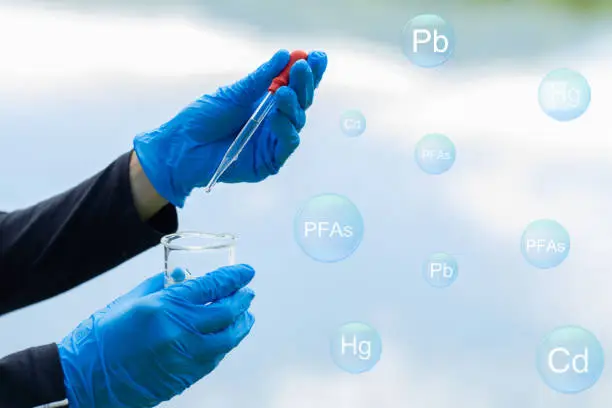
For years, the conversation around per- and polyfluoroalkyl substances (PFAS) followed a predictable pattern. It was often framed as a “local” issue—a problem for a specific town near a military base in the Midwest, or a community downstream from a chemical plant in the South. However, as we move through February 2026, that narrative has fundamentally shifted. PFAS drinking water testing in NYC has become essential for residents and municipalities seeking to identify and mitigate contamination in their water supplies, revealing through recent federal mandates and exhaustive environmental mapping that PFAS are not a series of isolated incidents but rather a nationwide systemic crisis. Recent discoveries have exposed the widespread nature of these chemicals, demonstrating that no region is truly immune to this growing threat.
The sheer scale of the problem is no longer up for debate. With the EPA’s 4.0 parts per trillion (ppt) limit for PFOA and PFOS now firmly in place, thousands of water systems across the country are discovering that they are in violation of health-based standards. From major metropolitan hubs to the most remote locations, the “forever chemical” footprint is everywhere.
The National Saturation: 97% of Americans and Counting
The primary reason this has escalated to a national crisis is the ubiquity of human exposure. According to data updated by the CDC in early 2026, PFAS are detectable in the blood of approximately 97% of the American population. This isn’t just a statistic for industrial workers; it is a reality for infants, pregnant women, and the elderly in every state.
Because these chemicals are “forever” in nature, they do not break down in the environment or the human body. They accumulate. Over decades, the use of PFAS in everything from non-stick cookware and waterproof apparel to firefighting foams has created a “closed-loop” of contamination. Even if a family lives miles from any known source, the atmospheric transport of these chemicals—carried by wind and rain—means that no backyard is truly isolated from the health risks associated with chronic exposure.
The Regulatory Catalyst: 2026 and the 4.0 PPT Standard
2026 marks a turning point in how we define “safe” water. For a long time, the lack of a national standard allowed local authorities to move at their own pace. That era ended when the EPA finalized the National Primary Drinking Water Regulation (NPDWR).
By setting the limit at 4.0 ppt—effectively the lowest level that can be reliably detected—the federal government has acknowledged that there is likely no “safe” level of exposure to these compounds. This mandate has forced a national reckoning. Public water systems that previously claimed to be “safe” under old, higher health advisories are now legally required to disclose exceedances. As we discuss on our blog, this has created a wave of transparency that is empowering families to seek building-specific testing methods to verify their own tap water.
The Economic Burden of a National Crisis
A local problem can be solved with a local grant; a national crisis requires a total economic overhaul. The cost of remediating PFAS on a national scale is currently estimated to exceed hundreds of billions of dollars. This includes:
- Infrastructure Upgrades: Thousands of municipal treatment plants must now install advanced Granular Activated Carbon (GAC) or Ion Exchange systems.
- Property Devaluation: In 2026, real estate transactions in many locations now require PFAS disclosures, impacting the market value of homes and commercial buildings.
- Healthcare Costs: The long-term health risks linked to PFAS—including kidney cancer, thyroid disease, and developmental delays in children—represent a massive future burden on the national healthcare system.
The federal government has pledged billions in Infrastructure Act funding to help, but experts agree that this is only a down payment on a much larger bill. For many property managers and homeowners, the wait for government-funded solutions is too long, leading to an increase in private, localized remediation efforts.
PFAS in the Food Chain: Beyond the Tap
The crisis has also expanded beyond drinking water. In 2026, significant attention has turned to the “biosolids” problem. For years, treated sewage sludge from cities was sold to farmers as fertilizer. We now know this sludge was often highly contaminated with PFAS.
This has effectively “seeded” American farmland with forever chemicals. PFAS are taken up by crops and accumulate in the livestock that graze on those lands. This means that even if you filter your water, you may still be exposed through the national food supply. This systemic contamination is the hallmark of a national crisis—one where individual choices are limited by a contaminated environment.
Vulnerable Populations and Environmental Justice
The national crisis also has a human rights dimension. While PFAS affect everyone, the burden is not shared equally. Communities located near landfills, airports, and industrial sites often face much higher concentrations. In 2026, the National Institute of Environmental Health Sciences has highlighted that low-income and minority communities are disproportionately represented in these “hot zones.”
Addressing this as a national crisis means ensuring that safety isn’t a luxury. It requires a standardized approach to testing methods and remediation that protects every citizen, regardless of their zip code. The movement toward environmental justice is now a core pillar of the national PFAS response strategy.
The Shift to Product-Level Regulation
Because water contamination is so difficult to fix once it happens, the national strategy in 2026 has shifted toward “source reduction.” Several states, including New York and California, have enacted total bans on PFAS in food packaging and textiles.
However, a patchwork of state laws is not enough for a global supply chain. There is now a strong push for a federal “PFAS Action Act” that would ban non-essential uses of all PFAS compounds nationwide. By stopping the flow of chemicals at the factory level, the government hopes to eventually turn the tide on the national water crisis.
Conclusion: A Call for Personal Vigilance
The transition of PFAS from a local nuisance to a national crisis has fundamentally changed the responsibility of the individual. In an era where 97% of the population carries these chemicals, and thousands of water systems are struggling to meet new safety limits, you cannot afford to be a passive consumer.
The national crisis is a collection of millions of local stories. Protecting your family or your business starts with moving from the “national average” to your specific reality. Because the government’s 2031 deadline for full infrastructure compliance is still years away, the most effective next step you can take to mitigate health risks is to establish your own baseline. If you are ready to take control of your environment and ensure your water meets the 2026 gold standard, the best path forward is to contact a specialist today for a certified, high-precision analysis. Knowledge is the only way to navigate a crisis this large.