
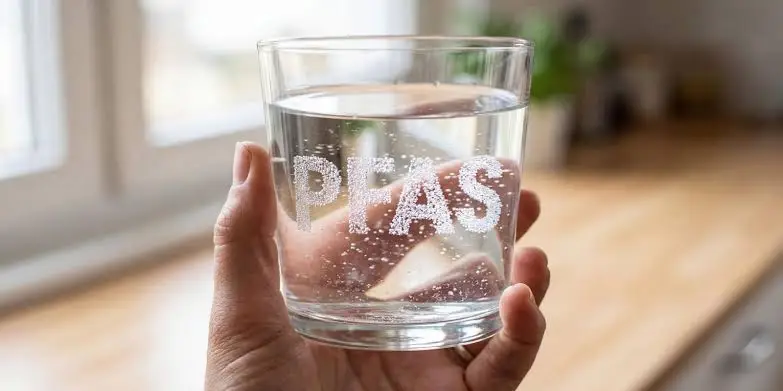
PFAS has become one of the most talked-about water quality concerns in the United States, with homeowners regularly encountering the term “forever chemicals” in news reports, city updates, filter advertisements, and environmental discussions. However, many people still don’t fully understand what these contaminants are, why they matter for their health, or when PFAS drinking water testing in Queens becomes necessary to protect their families. Understanding PFAS contamination, how it persists in water supplies, and what testing reveals about your specific water quality can help you make informed decisions about your household’s water safety.
PFAS stands for per- and polyfluoroalkyl substances. They are a large group of human-made chemicals that have been used in many products because they resist heat, oil, grease, stains, and water. Because some PFAS break down very slowly, they can remain in the environment for a long time. That is why they are often called forever chemicals.
For homeowners, the main question is simple: could PFAS be in my drinking water, and how would I know? The answer starts with testing. PFAS usually do not change the way water looks, smells, or tastes. Clear water can still need testing if there is a concern.
PFAS Are Not a Single Chemical
One reason PFAS can feel confusing is that PFAS is not one chemical. It is a broad family of chemicals. Some of the most discussed PFAS include PFOA, PFOS, PFHxS, PFNA, PFBS, and HFPO-DA, also known as GenX chemicals.
Different PFAS may have different sources, behaviors, and health concerns. Some have been studied more than others. Some have been phased out of certain uses, but they may still remain in soil, water, and the environment because they do not break down easily.
This is why PFAS testing should be specific. A general water test may not include PFAS unless the test is designed for it. If a homeowner wants to know whether PFAS are present, the test panel must include the right PFAS compounds.
For homeowners who need clear testing support, Olympian Water Testing PFAS focuses on helping people better understand PFAS-related water concerns.
Why PFAS Are Called Forever Chemicals
PFAS are often called forever chemicals because many of them are highly persistent. They resist natural breakdown in the environment. This means they can remain in water, soil, sediment, wildlife, and people for long periods.
PFAS have been used in products such as stain-resistant materials, water-resistant fabrics, nonstick coatings, food packaging, industrial processes, and some firefighting foams. Over time, PFAS can move into the environment through manufacturing, disposal, wastewater, runoff, landfills, and contaminated sites.
Once PFAS reach water sources, they can be difficult to remove without targeted treatment. That is why PFAS testing and proper filtration selection matter.
The U.S. Environmental Protection Agency provides a detailed overview of PFAS through its PFAS information page.
PFAS Usually Have No Taste, Color, or Odor
One of the most important things homeowners should understand is that PFAS are not usually detectable by normal senses. You cannot reliably taste, smell, or see PFAS in water. Water may look perfectly clear and still contain PFAS.
This is different from some other water concerns. Iron may cause staining. Chlorine may have a noticeable smell. Hardness may leave scale. Sediment may appear as particles. PFAS do not usually give homeowners those obvious clues.
That is why testing is the only practical way to know whether PFAS are present in drinking water. Guessing based on appearance is not enough.
For more information about testing options, visit the water testing page.
Why PFAS Testing Has Become More Important
PFAS testing has become more important because scientific understanding and regulatory attention have grown. Public agencies, researchers, water systems, and homeowners are paying closer attention to PFAS in drinking water.
In 2024, the EPA finalized national drinking water standards for several PFAS. These standards include legally enforceable maximum contaminant levels for PFOA, PFOS, PFHxS, PFNA, and HFPO-DA, as well as a hazard index approach for certain PFAS mixtures.
This does not mean every home has PFAS in the water. It means PFAS are serious enough that federal drinking water rules now directly address them. Homeowners who are concerned about PFAS need testing that is specific enough to detect them at relevant levels.
PFAS testing helps homeowners move from uncertainty to information.
Public Water Reports May Not Answer Every Home Question
Many homes receive water from public water systems that are monitored under federal and state requirements. Public water reports can be helpful, but they may not always answer every question a homeowner has about their specific tap.
A public report may show system-wide monitoring results, while a homeowner may want to know what is coming from their own kitchen faucet. In some cases, the concern may involve the source water. In other cases, it may involve a nearby contamination issue, private well, treatment system, or filtration question.
For homeowners on private wells, testing can be even more important because private wells are not monitored the same way public systems are.
The testing methods page can help explain why proper sampling and analysis matter for PFAS.
PFAS and Private Wells
Private well owners should pay special attention to PFAS if they live near possible contamination sources. These may include airports, military facilities, firefighting training areas, industrial sites, landfills, wastewater treatment areas, or places where PFAS-containing materials may have been used or disposed of.
A private well can be affected by local groundwater conditions. Unlike public water systems, private wells are generally the homeowner’s responsibility to test and maintain.
PFAS testing for wells should be done through appropriate laboratory methods. Basic home test strips are not enough for PFAS. Homeowners should use qualified testing services that can collect and analyze samples correctly.
Testing helps well owners decide whether treatment is needed and what type of treatment may be appropriate.
PFAS and Health Concerns
PFAS health information should be handled carefully. Not every exposure leads to illness, and risk depends on the type of PFAS, level of exposure, length of exposure, and personal health factors. However, major public health agencies recognize that certain PFAS may be associated with health concerns.
The CDC’s Agency for Toxic Substances and Disease Registry explains that scientific studies have linked certain PFAS exposure with possible effects such as changes in cholesterol levels, lower antibody response to some vaccines, changes in liver enzymes, pregnancy-related effects, and certain cancers. Homeowners can read more through ATSDR’s PFAS health effects page.
A water test does not diagnose health issues. It simply helps identify whether PFAS are present in the water. If someone has medical concerns related to PFAS exposure, they should speak with a qualified healthcare provider.
For general PFAS risk education, visit the health risks page.
PFAS Testing Requires the Right Lab Methods
PFAS testing is not the same as testing for hardness, chlorine, or pH. PFAS are typically measured at very low levels, often in parts per trillion. That means sample collection, handling, and laboratory methods are very important.
Because PFAS are used in many products, samples must be collected carefully to avoid contamination. The wrong container, handling method, or sampling approach can affect results.
Professional PFAS testing helps make sure the sample is collected and analyzed properly. This is especially important if results will guide filtration, treatment, property decisions, or follow-up testing.
Homeowners should avoid assuming that a basic water test automatically includes PFAS. It usually does not unless PFAS are specifically requested.
Filters Can Help, but They Must Be Chosen Carefully
Some filters can reduce PFAS, but not all filters are designed for PFAS. A filter that improves taste may not reduce PFAS. A simple refrigerator filter may not be enough. A pitcher filter may or may not be certified for PFAS reduction depending on the model.
Treatment technologies that may reduce certain PFAS include activated carbon, ion exchange, and reverse osmosis, but performance depends on the specific system, certification, installation, maintenance, and water conditions.
The EPA recommends identifying filters certified by accredited third-party certification bodies when choosing filters for PFAS reduction. EPA’s guide on filters certified to reduce PFAS explains why certification matters.
Testing before buying a filter helps homeowners avoid wasting money on a product that does not match the problem.
Test Before and After Filtration
If PFAS are a concern, homeowners may want to test before and after installing a filter. The first test shows whether PFAS are present in unfiltered water. The second test helps show whether the treatment system is reducing the target compounds.
This is important because filters can lose effectiveness if they are not maintained. Cartridges need replacement. Reverse osmosis systems need service. Activated carbon systems can become exhausted. A filter should not be trusted forever without maintenance.
Testing creates a baseline and helps confirm performance over time.
For homeowners comparing testing and treatment steps, the blog can be used as an educational resource.
PFAS Testing for Businesses and Facilities
PFAS testing is not only for homeowners. Businesses, property managers, schools, childcare spaces, offices, wellness facilities, restaurants, and other locations may want to understand their drinking water quality.
Any property that serves drinking water, prepares food or beverages, uses water for customers, or wants documentation may benefit from testing. This is especially true if the property is near known or suspected PFAS sources or uses a private well.
Commercial and facility testing may require careful planning because there may be multiple taps, filters, storage tanks, or water-use points.
For service area details, visit the locations page.
What Homeowners Should Do If PFAS Are Found
If PFAS are found in drinking water, the next step depends on the level, the compounds detected, the water source, and the household’s needs. Homeowners should review results carefully and compare them with current regulatory or health-based guidance.
Possible next steps may include installing a certified treatment system, using a tested alternative water source, maintaining filters properly, retesting after treatment, or contacting local authorities if the source may affect more than one property.
Do not assume one test result tells the whole story forever. Water quality can change, and treatment systems require maintenance.
A clear action plan should be based on reliable testing, not panic.
Final Thoughts
PFAS in drinking water is an important issue because these chemicals can persist in the environment and may be present without changing the taste, smell, or appearance of water. Homeowners cannot confirm PFAS by looking at a glass of water. Testing is the practical first step.
PFAS testing should be specific, properly collected, and analyzed through appropriate methods. Results can help homeowners decide whether filtration, treatment, follow-up testing, or additional guidance is needed.
Filters can help, but only when they are certified for the concern and maintained correctly. Testing before and after filtration provides better confidence than guessing.
To learn more about PFAS testing, visit Olympian Water Testing PFAS or reach out through the contact page to ask about testing options for your home, well, business, or property.