
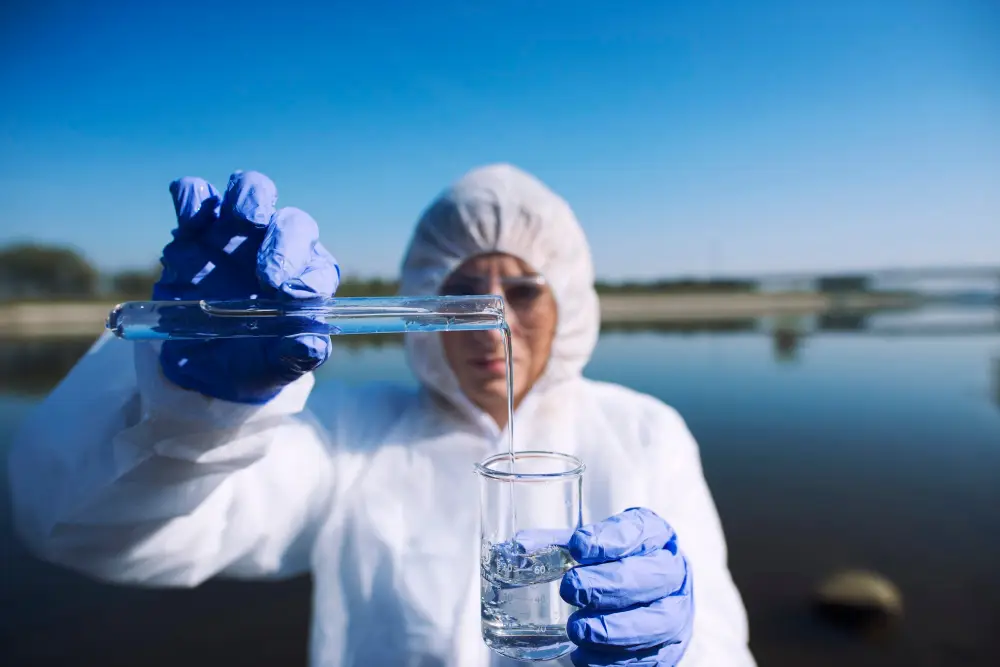
As we move through 2026, the narrative surrounding “forever chemicals” in the Northeast has shifted from a focus on industrial hotspots to a more complex reality. For years, residents in New York, New Jersey, and Connecticut primarily associated per- and polyfluoroalkyl substances (PFAS) with specialized manufacturing zones or military airfields. However, recent data from the first quarter of 2026 reveals that PFAS water testing in Queens and similar suburban locations has become essential as these persistent compounds are appearing in household environments where no obvious source of pollution exists, helping residents identify and address contamination risks that were previously thought to be limited to industrial areas.
The Northeast is currently a focal point for what scientists are calling “diffuse contamination.” Because these chemicals do not break down and are highly mobile in water, they have migrated far beyond the factory gates of the 20th century. For homeowners and business owners in the region, understanding these unexpected pathways is the first step in addressing modern health risks.
The Biosolids and Farmland Connection
One of the most startling developments in 2026 is the discovery of PFAS on agricultural lands that were previously considered pristine. In states like Maine and New York, the historical practice of spreading “biosolids”—treated sewage sludge—as fertilizer has inadvertently seeded the soil with PFAS.
[Image keyword: 2026 map of Northeast US farmland impacted by PFAS biosolid contamination]
Because PFAS are “forever chemicals,” they remain in the soil for decades, eventually leaching into the groundwater that feeds local private wells. In 2026, many rural locations are finding that their “farm-to-table” water is testing above the federal 4.0 parts per trillion (ppt) limit. This has led to a massive push for new testing methods that can detect these chemicals in complex organic matrices like soil and produce, not just in clear tap water.
The “Ambient” Contamination of Modern Offices
Unexpected findings aren’t limited to the outdoors. A major 2026 study conducted in high-rise office buildings across the Tri-State area found detectable levels of PFAS in breakroom taps, even when the municipal source was compliant. The culprit? Indoor dust and legacy building materials.
As we’ve discussed on our blog, many consumer products—including stain-resistant carpets, upholstery, and even certain types of floor wax—shed microscopic particles as they age. In the sealed environment of a modern office, these particles settle on faucets and water fountains. This means that even in a brand-new “green” building, the water at the tap can fail a PFAS test due to internal “ambient” exposure.
Suburban Runoff and “Passive” Sources
In the densely populated Northeast, the lines between industrial, commercial, and residential zones are often blurred. In 2026, researchers have identified “passive” sources that are contributing to unexpected spikes in suburban groundwater:
- Artificial Turf: Many sports fields in the Northeast use synthetic turf that contains PFAS-based processing aids. Rainwater runoff from these fields has been linked to elevated levels in nearby residential aquifers.
- Septic Systems: In areas without municipal sewers, household products—ranging from dental floss to shampoos—are sent into septic tanks. These systems are not designed to filter PFAS, allowing the chemicals to seep directly into the local water table.
- Car Washes: Specialized waxes and water-repellents used in professional car washes often contain high concentrations of PFAS. Without advanced wastewater treatment, this runoff can enter the local environment in surprising volumes.
State-Level Action: New York and Connecticut Lead the Charge
The regulatory response in the Northeast has been the fastest in the nation. As of early 2026, Connecticut has implemented new labeling laws requiring manufacturers to disclose “intentionally added PFAS” in everything from cookware to menstrual products. New York has launched a significant rebate pilot program for private well owners who find themselves in these “unexpected” contamination zones.
Despite these state wins, the burden of proof still rests with the individual. Because the contamination is so diffuse, a “passing” report for a city or a town does not guarantee that your specific locations are safe. The unique geology of the Northeast, with its fractured bedrock and complex aquifer systems, means that two houses on the same street can have vastly different PFAS profiles.
The Importance of Speciation in Testing
In 2026, simply knowing you have “PFAS” in your water is no longer enough. To find the source—and the solution—you need speciation. Professional testing methods now identify dozens of different compounds, from legacy “long-chain” chemicals like PFOA to newer “short-chain” replacements like GenX.
Identifying the specific chemical “fingerprint” allows you to determine if your water is being impacted by old industrial runoff, modern consumer products, or agricultural biosolids. This data is vital for choosing the right filtration system and for any potential legal or insurance claims regarding property devaluation.
Conclusion: Closing the Information Gap
The discovery of PFAS in unexpected places across the Northeast is a wake-up call for the region. We are no longer dealing with a few isolated “polluters”; we are dealing with a chemical legacy that has integrated itself into our daily lives. While the states are moving faster than the federal government to provide guidance, the only way to ensure your home or office is truly a safe zone is through direct verification.
Don’t assume that because you aren’t near a factory, your water is clear. The most effective next step you can take to address these health risks is to verify your specific exposure. If you are ready to move beyond the “unexpected” and get a definitive answer about your water quality, the best path forward is to contact a specialist today for a high-precision, lab-certified analysis. In 2026, the best filter is a facts-first approach.