
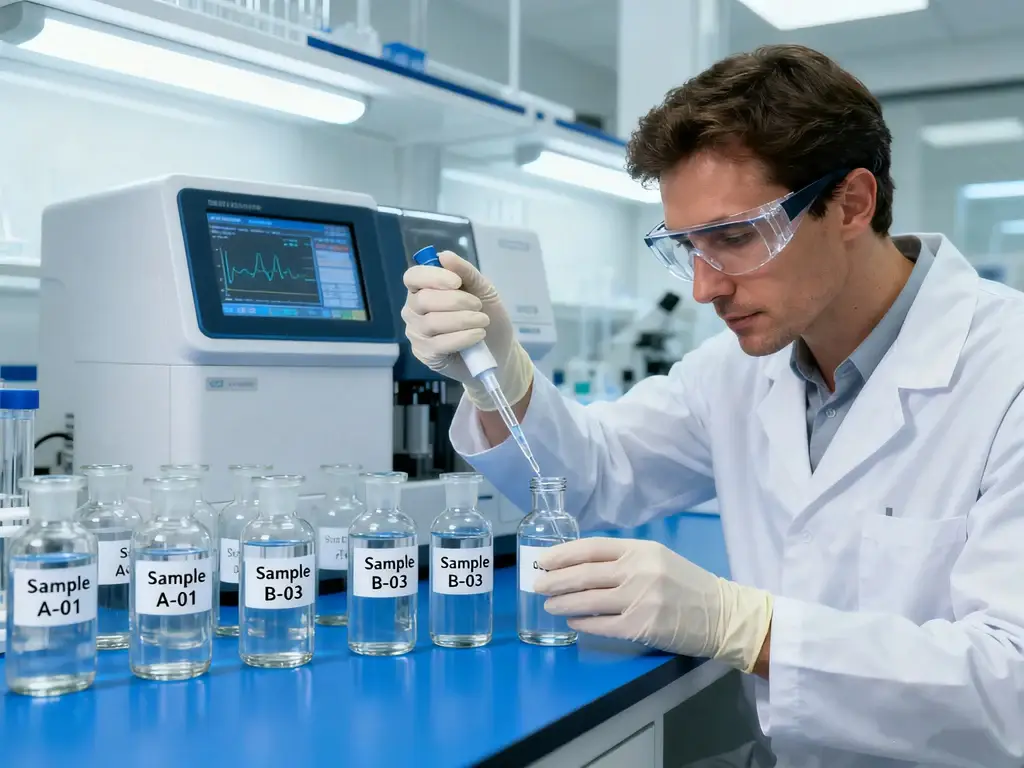
Certified PFAS water testing in NYC helps homeowners, businesses, and property managers cut through the confusion surrounding forever chemicals, public water regulations, private wells, filtration options, and health risks by providing clear, straightforward information backed by professional laboratory analysis. While PFAS water testing can feel overwhelming at first, understanding what these contaminants are, how they enter your water supply, and what certified testing reveals makes the process far more manageable than it initially appears, especially when you have expert guidance to simplify the technical details.
A practical checklist makes PFAS testing easier. Instead of guessing, property owners can move step by step: identify the water source, choose the right tap, test before filtration, use the correct method, review results carefully, choose certified treatment if needed, and retest after changes.
PFAS usually do not change the taste, smell, or appearance of drinking water. That means clear water is not enough to confirm whether PFAS are present. Testing is the practical way to understand what is happening at a specific home, well, business, or facility.
Step 1: Know Your Water Source
The first step is knowing where your water comes from. Is the property connected to a public water system? Does it use a private well? Is there a shared well, storage tank, building treatment system, or commercial filtration setup?
This matters because public water customers and private well owners may approach PFAS testing differently. Public water systems are monitored under drinking water rules, while private wells are usually the owner’s responsibility.
The U.S. Environmental Protection Agency finalized national drinking water standards for several PFAS in 2024, including enforceable limits for PFOA and PFOS, plus standards for PFHxS, PFNA, HFPO-DA, and mixtures involving certain PFAS. Public water systems must follow those regulations, but private well owners generally need to arrange their own testing.
For property-specific PFAS support, visit Olympian Water Testing PFAS.
Step 2: Identify Why You Want to Test
Before ordering a PFAS test, be clear about the reason. Your goal affects which water point you test and how results should be interpreted.
Common reasons include:
You use a private well.
Your property is near a possible PFAS source.
Local agencies reported PFAS concerns.
You want to test before buying a filter.
You want to check whether a filter is working.
You are buying or selling a property.
You manage a business or facility.
You have household members who may be more sensitive to exposure.
The clearer the reason, the easier it is to choose the correct test. PFAS testing should answer a real question, not just create a report.
For more guidance, visit the water testing page.
Step 3: Check for Local PFAS Risk Factors
PFAS risk can be location-specific. Some areas have more reason to test because of nearby contamination sources or historical land use.
Possible PFAS sources may include airports, military facilities, firefighting training areas, industrial sites, landfills, wastewater treatment areas, plating facilities, manufacturing sites, and places where PFAS-containing materials were used or disposed of.
This does not mean every nearby property has PFAS in the water. It means testing may be more relevant if those risk factors exist.
If you are unsure about local risk, check public agency resources, water provider updates, environmental notices, or local health department information. For broader service coverage, visit the locations page.
Step 4: Choose the Right Tap or Sample Point
PFAS testing should be collected from the water point that answers your question.
For homes, this is often the kitchen tap used for drinking and cooking. For private wells, testing may include raw well water before treatment and finished tap water after treatment. For businesses, the sample may come from a tap used for coffee, ice, food preparation, drinking water, or customer service.
If you only test filtered water, you may not know what is in the original water source. If you only test raw water, you may not know what people actually drink after filtration.
In some cases, both pre-filter and post-filter testing are useful. This is especially true when evaluating a treatment system.
Step 5: Do Not Assume a General Water Test Includes PFAS
A basic water test may include pH, hardness, iron, lead, copper, chlorine, nitrates, bacteria, or total dissolved solids. These are useful tests, but they usually do not answer the PFAS question unless PFAS analysis is specifically included.
PFAS testing requires targeted laboratory methods. The test should list which PFAS compounds are included, such as PFOA, PFOS, PFHxS, PFNA, PFBS, HFPO-DA, or other compounds.
If your concern is PFAS, make sure the test panel is designed for PFAS. Otherwise, you may receive a water report that leaves the main question unanswered.
The testing methods page can help explain why method selection matters.
Step 6: Follow Sampling Instructions Carefully
PFAS samples need careful handling because PFAS may be found in many materials. Labs and testing providers may give specific instructions about containers, labels, shipping, clothing, food packaging, personal care products, gloves, and sampling behavior.
These instructions may seem strict, but they help protect the sample from outside contamination. PFAS can be measured at very low levels, so the sampling process matters.
Do not collect PFAS samples in a random bottle from home. Use approved containers and follow instructions exactly.
Accurate results start before the sample reaches the lab.
Step 7: Use Proper Laboratory Testing
PFAS testing should be performed by a qualified laboratory using appropriate methods. PFAS are often measured in very small amounts, so laboratory sensitivity and quality control matter.
For important decisions, avoid relying on basic home kits or test strips. PFAS analysis is more specialized than simple water screening.
Proper lab testing helps property owners make decisions about filtration, treatment, follow-up testing, and documentation.
If results will be used for a business, facility, property sale, rental concern, or serious household decision, reliable laboratory testing is especially important.
Step 8: Understand What “Not Detected” Means
If a PFAS result says “not detected,” that can be reassuring, but it is still important to understand the reporting limit. “Not detected” usually means the lab did not detect the compound above a certain method limit. It does not always mean absolute zero.
This is why the test method and reporting limits matter. A more sensitive method may detect lower levels than a less sensitive method.
Keep the report for future comparison. If local PFAS information changes later, or if a nearby contamination source is identified, retesting may make sense.
A non-detect result is useful, but it should be understood in context.
Step 9: Review Detected PFAS Carefully
If PFAS are detected, review which compounds appear and at what levels. PFAS reports may list several compounds, and the results may not all mean the same thing.
Some compounds may be regulated. Others may be included for screening or informational purposes. Some may be detected below certain guidance levels. Others may require action depending on current rules, location, and water use.
The EPA’s PFAS drinking water regulations focus on several PFAS, including PFOA, PFOS, PFHxS, PFNA, and HFPO-DA, plus a hazard index approach for certain PFAS mixtures. This makes careful result review important.
Do not panic over a report you do not fully understand. Ask for help interpreting the numbers.
Step 10: Compare Results with Current Guidance
PFAS standards and guidance can change as science and regulation develop. That means results should be compared with current federal, state, or local guidance.
For public water systems, federal PFAS drinking water rules create compliance requirements. For private wells, homeowners may need to consult state environmental agencies, health departments, or qualified professionals for guidance.
If the result is close to or above relevant levels, follow-up testing or treatment may be needed. If results are low or not detected, documentation may still be useful for future comparison.
The health risks page can help homeowners understand why PFAS results should be taken seriously but interpreted carefully.
Step 11: Test Before Buying a Filter
Many people buy PFAS filters before testing. This is understandable, but it can lead to wasted money or the wrong system.
Testing first tells you whether PFAS are present and which compounds are detected. This helps you choose a filter that matches the actual water issue.
Some technologies may reduce certain PFAS, including granular activated carbon, ion exchange, and reverse osmosis. EPA has found that GAC, IX, and RO point-of-use systems studied can greatly reduce PFAS levels, but filters are only effective when maintained according to manufacturer instructions.
A filter should be chosen based on test results and certification, not fear-based marketing.
Step 12: Look for Certified PFAS Reduction
If a filter is needed, look for products certified by accredited third-party certification bodies for PFAS reduction. Do not rely only on vague claims like “clean water,” “advanced filtration,” or “removes contaminants.”
EPA provides guidance on identifying drinking water filters certified to reduce PFAS. NSF also explains that PFAS reduction claims are tied to testing and certification requirements.
Certification matters because PFAS reduction should be verified, not assumed.
A filter that improves taste does not automatically reduce PFAS. Since PFAS usually have no taste or odor, better taste is not proof of PFAS removal.
Step 13: Retest After Filtration
After installing a PFAS filter or treatment system, retesting can help confirm whether it is working. A before-and-after comparison is especially useful.
Test unfiltered water first to create a baseline. Then test filtered water after installation. If PFAS are reduced, that supports confidence in the system. If PFAS remain, the system may need adjustment, maintenance, replacement, or a different treatment approach.
Retesting is also important over time because filters can become exhausted. Cartridges and membranes do not last forever.
A PFAS filter should be treated as a maintained system, not a permanent one-time fix.
Step 14: Keep Records
Keep copies of all PFAS test results. Note the date, sample location, whether the water was filtered or unfiltered, the laboratory method, and any treatment system details.
Records are useful for homeowners, landlords, businesses, property managers, and private well owners. They help compare results over time and support decisions about filter replacement, property sales, facility maintenance, or follow-up testing.
A single PFAS test is a snapshot. Records help build a clearer long-term picture.
For more educational resources, visit the Olympian Water Testing PFAS blog.
Step 15: Know When to Ask for Help
PFAS results can be technical. If you are unsure what the report means, ask for help. A qualified testing provider, environmental professional, local health department, water treatment expert, or healthcare provider may be useful depending on the concern.
If you have health-related questions, speak with a healthcare provider. If you have treatment questions, speak with a qualified water professional. If you have local contamination questions, check with environmental or public health agencies.
Testing is the first step. Understanding and acting on results is the next step.
For direct testing questions, visit the contact page.
Step 16: Businesses Should Test Operational Water Points
Businesses and facilities should think beyond one sink. A cafe may need to test water used for coffee, ice, or food preparation. An office may test a breakroom dispenser. A childcare space may test drinking water taps. A wellness or food-related business may need documentation for customer confidence.
Business testing should identify the water points that matter most. If filters or treatment systems are used, both pre-filter and post-filter testing may be useful.
Businesses should also keep records of filter maintenance and test results.
PFAS testing can support better facility planning and clearer communication.
Step 17: Private Well Owners Should Retest When Conditions Change
Private well owners should be especially proactive. Retesting may be needed if nearby PFAS concerns are discovered, a treatment system is installed, a property is bought or sold, a well is repaired, or local environmental information changes.
Private wells are not usually monitored like public water systems. The homeowner is responsible for knowing the condition of the water.
PFAS testing may not be needed every month, but it should be considered when risk factors exist or conditions change.
A private well record is part of responsible property ownership.
Final Thoughts
PFAS water testing becomes easier when property owners follow a clear checklist. Start by knowing your water source. Identify why you are testing. Choose the right sample point. Make sure the test includes PFAS. Follow sampling instructions carefully. Use proper laboratory methods. Review results in context. Test before buying a filter. Choose certified PFAS reduction when needed. Retest after filtration. Keep records.
PFAS usually cannot be seen, smelled, or tasted in water. Testing is the practical way to know whether they are present and whether action is needed.
For homeowners, well owners, businesses, and property managers, a step-by-step approach prevents confusion and supports better decisions.
To learn more about PFAS water testing, visit Olympian Water Testing PFAS or reach out through the contact page to ask about testing options for your home, private well, business, or property.