
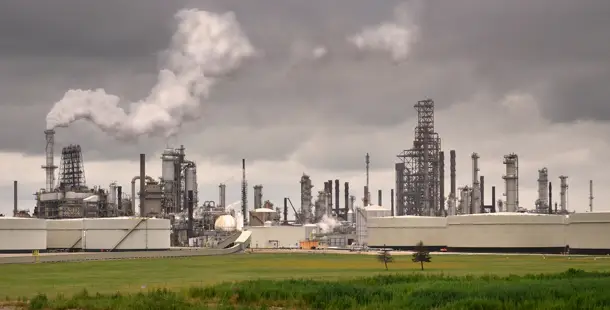
For decades, the conventional wisdom about water safety was straightforward: if you lived far from a smoke-belching factory or chemical manufacturing plant, your tap water was likely safe. But as we move through 2026, that assumption has been thoroughly dismantled. PFAS water testing in Brooklyn reveals that per- and polyfluoroalkyl substances are now appearing in the drinking water of pristine suburbs, remote rural towns, and high-rise apartments, miles away from any industrial point source, making professional testing essential for protecting your family’s health. Recent data from our various locations confirms this troubling reality across residential communities that once seemed insulated from contamination risks.
The reality of 2026 is that “forever chemicals” have achieved a state of global saturation. They are no longer just a localized industrial byproduct; they are an ambient environmental reality. To protect your home or business, it is essential to understand the hidden pathways these chemicals take to reach your faucet, even when there isn’t a factory in sight.
[Image keyword: infographic showing hidden sources of pfas in residential water systems 2026]
The Atmospheric Highway
One of the most surprising findings of 2026 research is the role of atmospheric transport. PFAS compounds are surprisingly mobile; they can be emitted into the air through industrial stacks, but they also “off-gas” from everyday products. Once airborne, these chemicals can travel hundreds, even thousands of miles.
When it rains or snows in the Northeast, the precipitation acts as a “scrubber,” pulling these airborne chemicals down and depositing them directly into local reservoirs and groundwater aquifers. This means that a mountain community with zero industrial history can still test positive for PFOA or PFOS. Relying on your zip code as a shield is no longer effective; the only way to be certain is through building-specific testing methods.
Landfills and the “Circular” Leak
Every time we throw away a “stain-resistant” carpet, a “waterproof” jacket, or a “non-stick” pan, we are contributing to the PFAS problem. In 2026, landfills have become massive reservoirs for these chemicals. As waste decomposes, it creates a liquid byproduct called leachate.
While modern landfills have liners, older ones—or those with structural compromises—can leak this chemical-heavy liquid into the surrounding soil. This leachate then migrates into the groundwater. Because PFAS do not break down, they can travel through the soil for miles, eventually infiltrating the private wells or municipal intakes of residential communities that believe they are safely removed from any “polluter.”
The Residential “Septic” Contribution
For those living in more rural locations, the threat might be coming from much closer to home. Household products—ranging from dental floss and shampoo to laundry detergents—often contain trace amounts of PFAS. When these products go down the drain in a house with a septic system, they are released into the leach field.
Standard septic systems are designed to filter out bacteria and nitrogen, but they are completely ineffective against the carbon-fluorine bonds of PFAS. Over years of use, a cluster of residential septic systems can inadvertently create a “plume” of contamination in the local aquifer. This is a primary reason why we are seeing “spikes” in PFAS levels in quiet, residential cul-de-sacs.
Municipal Distribution and Cross-Contamination
Even if the water leaving your city’s treatment plant is “compliant,” it still has to travel through a complex network of distribution pipes to reach your tap. In 2026, we are finding that the journey itself can be a source of contamination.
PFAS are “sticky” molecules; they can adhere to the mineral scale inside old water mains or hide in “dead legs” of the plumbing system. Furthermore, many commercial office buildings use internal fire suppression systems. If a backflow preventer fails, or if a system is improperly maintained, legacy firefighting foams (AFFF) can leach back into the potable water lines. This is why we often see high health risks in urban centers where the source water is technically “clean,” but the building’s internal plumbing is compromised.
Why “Wait and See” is a Risky Strategy
As we move toward the 2027 monitoring deadlines set by the EPA, many people are waiting for their local utility to give them the “all clear.” However, as we discuss on our blog, municipal reports are based on averages. They do not account for the specific contamination pathways affecting your specific property.
In 2026, the gap between “regulatory compliance” and “health safety” is wide. A city may be legally compliant with the 4.0 ppt limit, but your home could still be receiving water with elevated levels due to local runoff or internal building issues. Waiting for the government to fix the entire grid could take until the 2031 deadline—a delay that most health-conscious families find unacceptable.
Taking Control of Your Tap
The myth that PFAS are only a “factory problem” has been dangerous because it breeds complacency. If you want to ensure your water is safe in 2026, you must move from a passive consumer to an active monitor.
The first step is moving beyond the city’s annual report and conducting an independent analysis. By using lab-certified testing methods, you can determine if your water is being impacted by these “hidden” sources. Whether it’s atmospheric deposition, septic runoff, or internal plumbing issues, knowing the facts allows you to choose the right filtration—be it Granular Activated Carbon (GAC) for legacy chemicals or Reverse Osmosis (RO) for a more comprehensive shield.
Conclusion: Closing the Safety Gap
In 2026, the absence of a nearby factory is not a guarantee of clean water. PFAS are a global challenge that requires a local response. By understanding that these chemicals move through our environment in unexpected and invisible ways, you can better appreciate the health risks they pose to your family or tenants.
The most effective next step you can take to protect your home or office is to stop assuming and start measuring. If you want a definitive answer on your water quality and want to bypass the five-year wait for municipal upgrades, the best path forward is to contact a specialist today for a high-precision, building-specific analysis. Don’t let your location give you a false sense of security.