
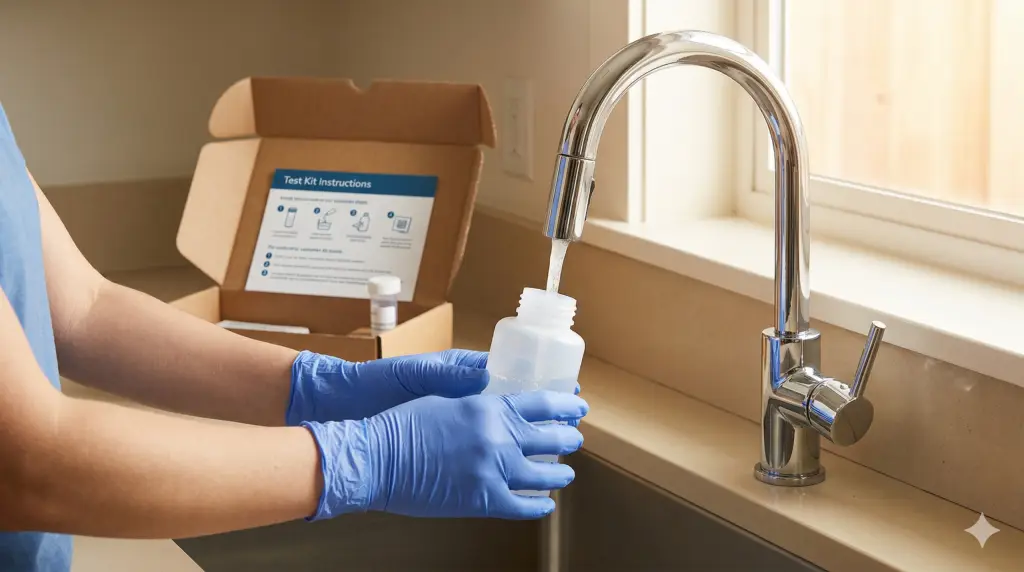
Certified PFAS water testing in the Bronx goes far beyond a simple check for chlorine, hardness, or pH, since these persistent chemicals are detected at extremely low levels and require meticulous handling throughout the entire testing process. Water that appears crystal clear, smells fresh, and tastes normal may still contain PFAS that only specialized laboratory analysis can reliably identify. This precision-driven approach is essential because standard tests simply cannot detect these contaminants, making professional certification crucial for accurate results.
For homeowners, well owners, businesses, and property managers, this matters because PFAS results may guide important decisions. A test result may influence whether a filter is installed, whether a treatment system is upgraded, whether follow-up testing is needed, or whether local authorities should be contacted. If the testing method is not appropriate, the results may not provide the clarity you need.
At Olympian Water Testing PFAS, the goal is to help property owners understand not only whether PFAS testing is needed, but also why the testing method itself matters.
PFAS Are Measured at Very Low Levels
PFAS are often measured in parts per trillion. That is an extremely small concentration. Because the levels are so low, testing requires sensitive laboratory equipment and careful sample handling.
A basic home test strip is not designed for this type of analysis. A simple taste, odor, or color check cannot detect PFAS. Even a standard water quality panel may not include PFAS unless PFAS testing is specifically requested.
This is why homeowners should not assume that “we tested the water” automatically means PFAS were tested. PFAS testing must be part of the selected test method or lab panel.
For a closer look at available testing options, visit the testing methods page.
PFAS Testing Is Different from General Water Testing
A general water test may check for common water quality indicators such as pH, hardness, iron, copper, lead, chlorine, bacteria, nitrates, or total dissolved solids. These are useful tests, but they do not automatically answer PFAS questions.
PFAS testing requires targeted analysis for specific compounds. Some tests may look for a small group of PFAS, while broader panels may include more compounds. The right choice depends on the water source, local concerns, property type, and reason for testing.
If a homeowner is concerned about forever chemicals, the test must be designed to detect them. Otherwise, the result may provide useful water information but still leave the PFAS question unanswered.
That is why PFAS water testing should be selected intentionally.
Sample Collection Can Affect Results
Sample collection matters because PFAS are found in many products and materials. If a sample is handled carelessly, contamination can occur. This is one reason PFAS testing often includes specific instructions about containers, clothing, cosmetics, food packaging, gloves, labels, and other sampling conditions.
For example, certain waterproof or stain-resistant materials may contain PFAS. Some packaging or personal care products may also create concerns during sampling. The purpose of careful sampling instructions is to reduce the chance that the sample is affected by something outside the water itself.
This does not mean homeowners should be afraid of the process. It simply means PFAS testing should be handled with more care than basic water screening.
Accurate results begin before the sample reaches the lab.
The Right Container Matters
PFAS testing usually requires specific sample containers provided or approved by the laboratory. Using the wrong container can affect results. A random bottle from home is not appropriate for PFAS testing.
Laboratories use containers that are selected for the test method. They may also include preservatives or handling instructions depending on the analysis. The sample may need to be shipped or delivered within a certain time period.
These details are important because PFAS testing depends on clean, controlled sample handling. If the sample container is wrong, the lab may reject the sample or the result may be less reliable.
Professional guidance helps prevent these problems.
Chain of Custody Can Be Important
For some testing situations, chain of custody may be needed. This is a documented record showing how the sample was collected, handled, transferred, and received by the lab.
Chain of custody may be especially important for businesses, property transactions, regulatory questions, legal concerns, or situations where results need formal documentation. For a homeowner simply wanting personal information, the process may be simpler, but documentation still helps.
A clear record can show which tap was tested, when the sample was collected, whether it was filtered or unfiltered, and what method was used.
Good documentation makes test results more useful.
Not Every PFAS Test Looks for the Same Compounds
PFAS is a large chemical family. A test may not include every PFAS compound in existence. Different laboratory methods may target different groups of PFAS.
Some tests focus on regulated or commonly studied PFAS such as PFOA and PFOS. Others may include additional compounds such as PFHxS, PFNA, PFBS, or HFPO-DA, often called GenX chemicals. More expanded panels may include a broader list.
This is why it is important to understand what the test includes. If you are concerned about PFAS, ask which compounds are being tested and whether the method matches your concern.
For homeowners, the best test is not always the biggest test. It is the test that answers the right question.
Public Water and Private Wells May Need Different Thinking
Public water customers and private well owners may approach PFAS testing differently. Public water systems may be monitored under current regulations, and public reports may provide some PFAS information. However, a homeowner may still want tap-specific testing for confidence or filtration decisions.
Private well owners often need to be more proactive. Private wells are generally not monitored the same way public water systems are. If a well is near a possible PFAS source, testing may be especially important.
Possible PFAS sources may include industrial sites, landfills, airports, firefighting training areas, wastewater treatment areas, military facilities, or places where PFAS-containing materials were used or disposed of.
For property owners across different service areas, the locations page can help connect testing needs with local coverage.
Testing Before Filtration Helps Avoid Guesswork
Many people buy a PFAS filter before testing their water. This is understandable, but it can lead to unnecessary spending or the wrong treatment choice.
Testing before filtration shows whether PFAS are present in the first place and which compounds are detected. It also provides a baseline. Without that baseline, it is hard to know whether the filter is needed or whether it is working.
Some filters may reduce certain PFAS, but filter performance depends on certification, water chemistry, installation, maintenance, and cartridge replacement. A filter that improves taste does not automatically reduce PFAS.
Testing first helps property owners make better filtration decisions.
Testing After Filtration Shows Performance
If a filter or treatment system is installed, follow-up testing can help show whether it is reducing PFAS. This is especially useful for reverse osmosis systems, activated carbon systems, ion exchange systems, or other treatment methods marketed for PFAS reduction.
Testing filtered water once is helpful, but long-term maintenance still matters. Filters can become exhausted. Cartridges can expire. Systems can be installed incorrectly. Water conditions can change.
A before-and-after testing approach gives clearer information than trusting a label alone.
For homeowners who want to learn more about risk and next steps, visit the health risks page.
Certified Labs Matter
PFAS testing should be performed by a qualified laboratory using appropriate methods. Certified or accredited labs follow recognized procedures for sample handling, analysis, quality control, and reporting.
This matters because PFAS testing is sensitive. Results may be reported at very low levels, and homeowners need confidence that the data was produced correctly.
A low-quality test can create confusion. A reliable test gives property owners better information for decision-making.
If test results will guide filtration, treatment, property sales, rental decisions, business operations, or health-related conversations, proper laboratory testing is worth it.
Results Need Careful Interpretation
PFAS results can be confusing because they may list several compounds with different numbers. Some compounds may be detected, while others may be below reporting limits. Some results may be measured in parts per trillion, and some may reference method detection limits or reporting limits.
A detected result does not automatically tell the whole story. The type of PFAS, the level detected, the current standards or guidance, and the water use pattern all matter.
Property owners should review results carefully and ask questions if they do not understand the report. The goal is not just to receive a number. The goal is to understand what the number means and what the next step should be.
PFAS Regulations Make Accurate Testing More Important
PFAS drinking water regulations have increased attention on testing accuracy. As federal and state standards develop, property owners need reliable results that can be compared with current guidance.
If a test method is too limited or not sensitive enough, it may not provide the information needed. If a sample is contaminated during collection, it may create unnecessary concern. If the wrong water source is tested, the result may not answer the real question.
Accurate testing supports better decisions, whether the result shows no PFAS detected, low-level detections, or levels that require further action.
Water testing should create clarity, not confusion.
Businesses and Facilities Need Method-Specific Testing
PFAS testing can be important for businesses, schools, offices, childcare facilities, wellness centers, restaurants, and properties where water is served or used in daily operations. For these locations, the testing method may need to be selected carefully based on documentation needs, water use, and the number of taps.
A business may want to test drinking water, filtered water, food-prep water, ice machine water, or water from a private well. Each location may require a different sampling plan.
Businesses should keep records of results, test methods, sample locations, and dates. This helps with future comparison and maintenance planning.
For commercial or property testing inquiries, visit the contact page.
Common Mistakes in PFAS Testing
One common mistake is assuming a general water test includes PFAS. Another is using an unapproved container. Another is buying a filter first and never testing. Some homeowners test only filtered water and never test the original tap water, which makes it harder to understand the source.
Another mistake is ignoring sampling instructions. PFAS testing instructions may seem strict, but they exist for a reason. Following them helps protect the sample from contamination.
It is also a mistake to assume one test result answers every future question. Water quality can change, and filters require maintenance. Follow-up testing may be needed after treatment, repairs, or new local information.
A Simple PFAS Testing Plan
A practical PFAS testing plan can look like this:
Identify the water source you want to test.
Decide whether the sample should be filtered or unfiltered.
Choose a PFAS-specific laboratory method.
Follow sampling instructions carefully.
Review which PFAS compounds were included.
Compare results with current guidance.
Decide whether filtration or treatment is needed.
Retest after treatment if needed.
Keep records for future comparison.
This plan helps homeowners and businesses move step by step instead of reacting out of fear.
Final Thoughts
PFAS water testing requires the right method because PFAS are measured at very low levels and require careful sampling, approved containers, qualified laboratory analysis, and thoughtful interpretation. A general water test may not include PFAS, and a basic home strip cannot answer serious PFAS questions.
The right testing method helps homeowners, well owners, businesses, and property managers understand whether PFAS are present and what next steps make sense. Testing before filtration creates a baseline. Testing after filtration helps confirm performance. Careful documentation makes results more useful over time.
PFAS testing is not about guessing from taste, smell, or appearance. It is about using the right process to get reliable information.
To learn more, visit the Olympian Water Testing PFAS blog or contact the team through the contact page to ask about PFAS testing options for your home, well, business, or property.